

In the realm of African wildlife experiences, Tanzania occupies an unmatched position of excellence. This East African jewel delivers safari adventures that combine breathtaking wildlife encounters, pristine wilderness landscapes, and authentic cultural experiences into journeys that leave indelible impressions on every traveler. Safari in Africa Tanzania represents more than tourism—it’s an immersion into ecosystems where life unfolds according to nature’s timeless patterns.
Tanzania’s Safari Excellence Explained
Tanzania has carved its reputation as Africa’s ultimate safari destination through deliberate conservation policies, geographical advantages, and unwavering commitment to wildlife protection. The nation encompasses 947,303 square kilometers of remarkably diverse terrain, within which approximately 360,000 square kilometers fall under formal protection. This commitment to conservation—protecting nearly 40 percent of national territory—creates wildlife corridors and protected ecosystems unparalleled in their scope and connectivity.
The results of this conservation dedication manifest in staggering wildlife statistics. Tanzania supports over 20,000 lions—approximately 25 percent of Africa’s total population. Elephant numbers exceed 60,000 individuals despite historical poaching pressures. Buffalo populations approach 500,000, while the country hosts one of the world’s few remaining viable black rhinoceros populations. These numbers translate into safari experiences where wildlife encounters aren’t fortunate coincidences but virtual certainties during properly executed game drives.
Beyond impressive population numbers, Tanzania preserves something increasingly precious in our modern world—genuine wilderness. Vast territories remain minimally developed, allowing visitors to experience landscapes and wildlife behaviors largely unaffected by human presence. The sense of discovery, adventure, and connection with wild nature that characterized historic African expeditions remains alive in Tanzania’s protected areas, particularly in the more remote southern and western parks.
Serengeti: The Gold Standard of Safari Destinations
The Serengeti ecosystem functions as the planet’s premier example of intact savannah wilderness operating at landscape scales. This protected area encompasses 14,750 square kilometers of grassland plains, acacia woodlands, riverine forests, and rocky kopjes within Tanzania, extending into Kenya’s Masai Mara to create a transboundary ecosystem totaling approximately 30,000 square kilometers. The Serengeti name, derived from the Maasai word “siringet” meaning “endless plains,” perfectly captures the vast horizons that define this landscape.
The Great Migration stands as nature’s most magnificent wildlife spectacle, involving approximately two million animals in perpetual movement through the ecosystem. This phenomenon includes roughly 1.5 million wildebeest, 200,000 plains zebras, and 400,000 Thomson’s gazelles moving in response to rainfall patterns and resulting grass growth. The migration follows a roughly predictable annual pattern, though exact timing varies based on weather conditions.
December through March finds herds concentrated in the southern Serengeti where nutrient-rich short grasses on volcanic soils provide optimal nutrition for pregnant and nursing females. The calving season peaks in late January and February when approximately 500,000 wildebeest calves are born within a compressed two-to-three-week timeframe. This synchronized birthing overwhelms predators through sheer numbers—though thousands of calves succumb to lions, leopards, cheetahs, hyenas, and jackals, the vast majority survive this vulnerable early period.
April’s approaching dry season triggers northward movement as southern grasslands desiccate. May and June see herds traversing the Western Corridor, encountering the Grumeti River where resident Nile crocodiles—some exceeding five meters in length—wait in murky waters. July through October brings the migration to the northern Serengeti and the most dramatic phase: the Mara River crossings. Steep muddy banks and swift currents create natural obstacles that produce chaos as thousands of desperate animals plunge simultaneously into treacherous waters.
The Serengeti’s resident wildlife populations alone would justify its global reputation. Approximately 3,000 lions inhabit the park in prides that maintain territories for generations. These social structures create fascinating behavioral dynamics—male coalitions defend territories through intimidation and occasional violent confrontations, females coordinate sophisticated cooperative hunts, and cubs learn essential survival skills through observation and practice under their mothers’ patient guidance.
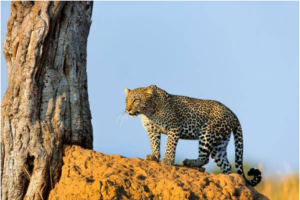
Leopards, masters of stealth and adaptation, occupy suitable habitats throughout the park. These solitary cats demonstrate remarkable versatility, equally comfortable in dense riverine forests or rocky kopje. Their habit of hoisting kills into trees—often prey animals weighing more than the leopard itself—demonstrates extraordinary strength while protecting meals from scavenging lions and hyenas. Cheetahs exploit the open plains where visibility and space allow utilization of their incredible speed, though their lightweight build makes them vulnerable to larger predators that frequently steal their hard-earned kills.
Ngorongoro Conservation Area: Living Laboratory
The Ngorongoro Conservation Area spans 8,292 square kilometers of highlands, forests, grasslands, and the spectacular volcanic crater that serves as its centerpiece. This unique protected area permits continued Maasai pastoralism alongside wildlife conservation, creating an innovative model recognizing indigenous land rights while protecting biodiversity. The area also encompasses Olduvai Gorge, where paleoanthropological discoveries have fundamentally shaped our understanding of human evolution.
The Ngorongoro Crater formed through volcanic collapse approximately 2.5 million years ago, creating a caldera measuring 19-20 kilometers in diameter with a floor area of 260 square kilometers. Crater walls rising 400-600 meters above the floor create both physical boundaries and unique microclimatic conditions that support one of Africa’s densest large mammal concentrations—approximately 25,000 animals residing permanently within this natural amphitheater.
The descent into Ngorongoro Crater provides one of safari’s most memorable moments. As vehicles wind down steep access tracks, the landscape gradually unfolds below—a mosaic of grasslands, acacia woodlands, freshwater marshes, and Lake Magadi’s alkaline waters, all contained within the dramatic crater walls. Morning fog frequently blankets the crater floor before sunrise, creating mystical atmospheres that gradually dissipate to reveal the extraordinary wildlife diversity below.
Wildlife viewing in Ngorongoro maintains exceptional quality throughout the year thanks to permanent water sources, year-round grazing on rich volcanic soils, and resident populations that don’t migrate. Lions are virtually guaranteed sightings with several prides maintaining crater floor territories across generations. Large elephant bulls with impressive tusks regularly descend from the forested rim to graze the lush grasslands. Buffalo herds sometimes numbering hundreds of individuals move across open areas while hippos occupy permanent pools and watercourses.
The crater’s black rhinoceros population represents a conservation bright spot within Tanzania’s broader struggles protecting this critically endangered species. Approximately 30 black rhinos inhabit the crater, benefiting from natural protection provided by crater walls and intensive anti-poaching efforts. While numbers remain insufficient to guarantee sightings, patient visitors spending full days in the crater frequently encounter these magnificent animals grazing openly—a privilege increasingly rare in modern Africa.
Tarangire National Park: Seasonal Marvel
Tarangire National Park demonstrates how African ecosystems transform in response to seasonal rainfall patterns that govern all life. This 2,850-square-kilometer protected area appears pleasant but unremarkable during November-May wet seasons when water availability spreads across the broader landscape. However, the June-October dry season brings dramatic transformation as the Tarangire River becomes a critical lifeline attracting wildlife from vast surrounding territories.
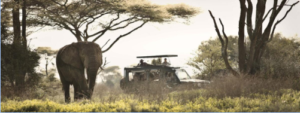
The park achieves legendary status during peak dry months for elephant encounters. Daily sightings of herds numbering 200-300 individuals become routine as extended family groups converge on riverbanks and shrinking waterholes. These massive congregations provide unparalleled opportunities for observing complex elephant social behaviors—matriarchs making leadership decisions, mothers nurturing dependent calves, adolescents testing boundaries, and mature bulls asserting dominance or seeking mating opportunities.
Tarangire’s distinctive landscape features massive baobab trees scattered across the terrain like ancient sentinels. These remarkable organisms, among Earth’s longest-lived species, achieve extraordinary proportions with trunks exceeding 10 meters in diameter. Individual specimens may be 1,000-2,000 years old, having witnessed countless elephant generations pass beneath their spreading branches. Baobabs provide critical resources—moisture-rich bark consumed by elephants during droughts, calcium-rich fruits eaten by various species, and hollow trunks sheltering diverse fauna from bats to birds.
Beyond elephants, Tarangire supports impressive wildlife diversity including large buffalo herds, various antelope species from massive eland to tiny dik-diks, giraffes browsing high acacia foliage, and healthy predator populations. Lions adapted to mixed woodland habitats patrol territories, leopards inhabit denser vegetation zones, and cheetahs utilize open areas for hunting. The park also hosts populations of less commonly observed species including fringe-eared oryx, gerenuk, greater kudu, and lesser kudu, adding depth for dedicated wildlife enthusiasts.
Lake Manyara: Ecological Compression
Lake Manyara National Park compresses remarkable ecological diversity into just 330 square kilometers, proving that safari quality depends more on habitat variety than territorial size. The park occupies a narrow strip between the towering Rift Valley escarpment and Lake Manyara’s fluctuating shoreline, creating dramatic elevational gradients with corresponding habitat transitions from groundwater forest through acacia woodland to grassland and wetland environments.
The groundwater forest near the park entrance creates lush microclimates sustained by year-round springs flowing from the escarpment. Dense vegetation harbors large olive baboon troops whose complex social hierarchies and vocal communications provide constant interest. Blue monkeys navigate the canopy with remarkable agility while bushbuck browse cautiously in the shadowy understory. The forest transitions gradually to acacia woodland where elephants concentrate and giraffes stretch long necks to reach high foliage.
Lake Manyara achieved international recognition through documented tree-climbing lion behavior. While lions elsewhere occasionally climb trees, Manyara’s population exhibits this behavior with sufficient consistency that patient visitors often observe lions resting in acacia branches during extended visits. Multiple hypotheses attempt explaining this unusual habit—thermoregulation during hot periods, escape from ground-level biting insects, improved visibility for detecting threats or prey—though no single explanation fully accounts for all observations.
The alkaline lake undergoes dramatic seasonal fluctuations in size and chemistry. During high water periods following regional rains, extensive shallows develop where algae blooms attract enormous flamingo congregations. Both lesser and greater flamingos—sometimes numbering tens of thousands—filter-feed on microscopic organisms, their massed pink forms creating spectacular visual displays against backdrops of blue water and green escarpment. The park’s bird diversity exceeds 400 species, establishing it as among Tanzania’s premier ornithological destinations.
Southern Circuit: Authentic Wilderness
Tanzania’s southern parks—Ruaha National Park and Nyerere National Park—remain dramatically undervisited compared to the famous northern circuit, despite offering equally impressive wildlife experiences in more remote, wilderness settings. These destinations appeal to experienced safari enthusiasts seeking authentic expedition atmospheres away from tourist concentrations.
Ruaha National Park encompasses 20,226 square kilometers of rugged terrain where the Great Ruaha River creates a vital corridor through harsh landscapes. The park’s vastness and minimal development preserve wilderness character increasingly rare globally. Multi-day safaris here deliver genuine adventure with possibilities of entire days without encountering other vehicles—a stark contrast to sometimes crowded northern circuit conditions during peak seasons.
The Great Ruaha River attracts massive wildlife concentrations during June-October dry seasons. Elephants gather in herds numbering thousands, buffalo congregate in enormous groups, and predators follow prey densities. Ruaha hosts over 10 percent of Tanzania’s total lion population with estimates exceeding 1,000 individuals. The park maintains significant African wild dog populations—these endangered cooperative hunters provide exceptional viewing when encountered, though their wide-ranging movements make sightings unpredictable.
Nyerere National Park spans 30,893 square kilometers in southeastern Tanzania, making it among Africa’s largest protected areas. Beyond traditional game drives, Nyerere permits walking safaris and boat safaris adding dimensions impossible in vehicle-only parks. Walking safaris with armed rangers create heightened sensory awareness and vulnerability that electronic observation cannot replicate. Boat safaris along the Rufiji River provide intimate encounters with hippos, crocodiles, and diverse waterbirds while showcasing aquatic ecosystems from unique perspectives.
Maximizing Your Safari Investment
Successful safari planning requires understanding how seasonal timing, accommodation choices, park selection, and operator quality interact to create optimal experiences. The June-October dry season provides classic safari conditions with concentrated wildlife, excellent visibility, and northern Serengeti river crossings, though this period attracts maximum tourists with premium pricing. January-February offers a spectacular southern Serengeti calving season with intense predator activity. November-December provides excellent viewing with moderate crowds and pricing, while March-May wet season brings heavy rains limiting access but offering dramatic discounts exceeding 40 percent.
Accommodation options span ultra-luxury lodges providing five-star amenities to budget camping using public facilities. Luxury properties occupy spectacular locations with game viewing from private decks, employ expert naturalist guides, and provide gourmet cuisine. Tented camps offer authentic bush experiences with comfort levels from rustic to luxurious. Mid-range lodges balance comfort and value, while budget camping minimizes costs for economically conscious travelers.
Operator selection profoundly impacts safari quality and value. Reputable companies employ experienced guides with extensive wildlife knowledge, maintain well-serviced vehicles ensuring reliability, and demonstrate genuine conservation commitments. Research operator credentials thoroughly, read independent reviews from previous clients, and ask specific questions about guide qualifications, vehicle conditions, safety protocols, and conservation contributions.
Conservation Through Tourism
Tanzania’s conservation successes exist within challenging contexts of rapid population growth, agricultural expansion, and resource demands that fragment wildlife habitats. Human-wildlife conflict intensifies as settlements encroach on traditional wildlife ranges—elephants destroy crops, predators kill livestock, and dangerous animals occasionally threaten human safety, creating legitimate grievances among rural populations.
Safari tourism provides crucial economic justification for maintaining protected areas. Annual park fees exceed $60 million, directly funding anti-poaching operations, ranger salaries, and habitat management. Tourism employment provides sustainable income alternatives to environmentally destructive activities. Revenue-sharing programs with adjacent communities create local stakeholder interests in conservation success while funding development projects improving quality of life.
Responsible travelers maximize positive conservation impacts through careful operator selection. Companies demonstrating genuine conservation commitment employ ethical labor practices, minimize environmental footprints, source provisions locally supporting community economies, and contribute financially to specific conservation initiatives. This conscientious approach ensures tourism spending supports rather than undermines conservation objectives.
Conclusion
Safari in Africa Tanzania delivers transformative experiences that transcend conventional tourism, creating profound connections with wilderness and wildlife that reshape perspectives and generate treasured lifelong memories. From the thunderous drama of migration river crossings to the silent intensity of predator stalks, from tender elephant family interactions to the vast silence of star-filled African skies, Tanzania offers moments that resonate deeply within every visitor’s soul.
The country’s unparalleled wildlife concentrations, vast protected landscapes, sophisticated yet minimal tourism infrastructure, and authentic conservation commitment collectively create safari experiences capturing Africa’s essence in its purest, most magnificent form. Whether seeking luxury comfort or adventurous camping, photographic excellence or simple nature immersion, cultural enrichment or pure wilderness connection, Tanzania accommodates all preferences while preserving the wild character that makes safaris profoundly meaningful.
Choosing safari in Africa Tanzania represents investment in personal transformation while supporting conservation ensuring these irreplaceable ecosystems and wildlife populations survive for future generations. The memories forged during your Tanzanian adventure—intimate wildlife encounters, dramatic survival spectacles, sweeping landscapes, and profound wilderness connections—become treasured possessions that enrich your life permanently while contributing to the ongoing protection of natural heritage belonging to all humanity.
Key Takeaways
- Tanzania protects approximately 360,000 square kilometers (40% of national territory) through interconnected conservation areas creating Africa’s most extensive protected wilderness network supporting free-ranging wildlife populations
- The Serengeti Great Migration involves two million animals moving continuously through 30,000 square kilometers with 500,000 wildebeest calves born in concentrated 2-3 week period during January-February
- Ngorongoro Crater’s 260-square-kilometer floor supports 25,000 large mammals at exceptional densities with 30 black rhinoceros providing Tanzania’s most reliable viewing opportunities for this critically endangered species
- Tarangire National Park transforms during June-October dry season into premier elephant destination with herds numbering 200-300 individuals amid spectacular ancient baobab landscapes exceeding 1,000 years old
- Southern circuit parks Ruaha and Nyerere offer remote wilderness experiences with walking safaris, boat safaris, and minimal tourist presence in vast territories exceeding 20,000 square kilometers each
- Optimal timing varies by priority: June-October for concentrated wildlife viewing and dramatic river crossings, January-February for calving season predator spectacles, November-December for moderate conditions and pricing
- Daily safari costs range from budget camping $200-300 to mid-range lodges $400-700 to ultra-luxury properties $1,500+ per person including accommodation, meals, park fees, and professional guiding services
- Experienced professional guides with decades of field experience and comprehensive wildlife knowledge dramatically enhance safari quality through superior tracking abilities, behavioral interpretation, and optimal positioning
- Safari tourism generates over $60 million annually in park fees directly funding anti-poaching operations, ranger salaries, habitat management, and community development creating local conservation stakeholders
- Year-round safari opportunities exist with distinct seasonal advantages from specific migration phases to optimal weather conditions to dramatically reduced pricing and tourist numbers during green season months
Frequently Asked Questions
What should I expect regarding bathroom facilities during game drives?
Bathroom access during game drives requires planning as most Tanzanian parks lack developed facilities along roads. Typical morning and afternoon game drives last 3-4 hours each, requiring bathroom use before departure. Many parks designate specific picnic sites with basic toilet facilities—simple pit latrines providing privacy but minimal amenities. Guides plan routes incorporating these sites during extended drives. For emergencies, guides find discreet locations where you can step behind bushes or use portable facilities some operators provide. Luxury operators sometimes equip vehicles with portable toilets for client convenience. Women should pack tissues and hand sanitizer as toilet paper isn’t always available. Most lodges provide bathroom access before departure and upon return. Moderating liquid intake before drives and communicating needs with guides ensures comfort during safari activities without embarrassment.
How do safari operators handle dietary restrictions and food allergies?
Reputable safari operators readily accommodate dietary restrictions and food allergies when notified during booking rather than upon arrival. Most lodges and camps maintain flexibility preparing vegetarian, vegan, gluten-free, kosher, halal, and other specialized meals. However, remote locations and limited supply chains mean variety may not match urban restaurant standards. Specific food allergies require clear communication including severity and potential cross-contamination concerns. Many luxury lodges maintain vegetable gardens supplying fresh produce, while chefs create innovative meals working within available ingredients. Budget safari operators provide simpler fare with less customization capacity. Travelers with severe allergies should bring emergency medications including epinephrine auto-injectors. Notifying operators about restrictions during booking—not week before departure—ensures proper provisions are available. Following up with pre-safari confirmation calls verifying dietary arrangements prevents disappointments and ensures safe, satisfying meal experiences throughout your journey.
What happens if I need prescription medications refilled during my Tanzania safari?
Bring complete medication supplies for your entire trip plus extra days as backup since obtaining prescription medications in Tanzania proves challenging even in major cities. Pharmacies in Arusha and Dar es Salaam stock many common medications though specific brands may differ from your home country. Remote safari areas lack pharmacies entirely, making mid-safari refills impossible. Carry medications in original containers with prescription labels facilitating customs clearance and providing information if medical assistance becomes necessary. Pack medications in carry-on luggage rather than checked bags preventing loss if luggage delays occur. Bring copies of prescriptions including generic drug names since brand names vary internationally. For controlled substances, carry doctor’s letters explaining medical necessity preventing customs complications. Consider medical travel insurance covering emergency prescription replacement and medical consultations. Splitting medications between multiple bags provides backup if one bag is lost. Proper advance preparation ensures uninterrupted medication access throughout your safari adventure.
Can I bring binoculars on safari or will operators provide them?
Bringing personal binoculars significantly enhances safari experiences as they allow independent wildlife observation and bird identification. While some luxury operators provide binoculars for guest use, quality varies considerably and availability isn’t guaranteed. Budget and mid-range operators rarely provide binoculars, expecting clients to bring their own. Recommended specifications include 8×42 or 10×42 magnification—the first number indicates magnification power while the second represents objective lens diameter in millimeters. Higher magnification (10x) provides more detail but smaller field of view and increased image shake, while lower magnification (8x) offers wider views and more stable images. Quality matters significantly—reputable brands like Nikon, Bushnell, Vortex, and Celestron offer excellent mid-range options. Compact binoculars sacrifice some optical quality but pack easily in hand luggage. Bring lens cleaning cloth and protective case. Binoculars dramatically improve wildlife viewing, bird identification, and overall safari satisfaction, making them essential equipment worth investing in before your Tanzania adventure.
How do I handle tipping at multiple lodges during multi-park safaris?
Tipping at multiple safari lodges requires planning and carrying adequate cash in small denominations. General guidelines suggest $10-15 per person per day for camp/lodge staff distributed collectively through communal tip boxes most properties maintain. Safari guides typically receive $20-30 per person per day depending on service quality and group size. For multi-day safaris with the same guide, provide accumulated tips at journey’s end. Transfer drivers receive $5-10 per transfer. Special services like spa treatments or private bush dinners warrant additional gratuities. Prepare tip envelopes before departure containing appropriate amounts for each lodge stay and guide services. U.S. dollars remain preferred tipping currency—bring small denominations ($1, $5, $10, $20 bills) as change proves difficult obtaining. Some luxury operators include gratuities in package pricing, eliminating tipping concerns—verify this when booking. Calculate approximately $50-75 per person daily for comprehensive tipping covering all services. Generous tipping for exceptional service encourages excellence while recognizing hard-working staff making your safari memorable.
What photography etiquette should I follow on safari?
Photography etiquette on safari balances capturing memories with respecting wildlife, other guests, and guide instructions. Never ask guides to position vehicles inappropriately for photographs—animal welfare supersedes photographic opportunities. Avoid standing in open vehicles without guide permission as sudden movements can startle wildlife or attract dangerous attention. Refrain from using flash photography as it disturbs nocturnal animals and ruins others’ night vision. Respect other passengers’ sight lines—avoid monopolizing prime positions or blocking others’ views for extended periods. Keep noise minimal as excessive talking disrupts wildlife and diminishes others’ experiences. Don’t pressure guides to approach closer than regulations permit or stay longer than reasonable when others wish to move on. Drone photography requires special permits and is prohibited in most parks—violations result in confiscation and potential legal action. Share sightings with other vehicles via radio protocol guides use—safari community cooperation benefits everyone. Professional photographers should avoid dominating shared vehicle space with excessive equipment. Balanced approach respects all stakeholders while capturing memorable images.
How do I prepare for early morning game drives starting before sunrise?
Early morning game drives typically depart 30-60 minutes before sunrise when wildlife activity peaks and lighting conditions produce spectacular photography. Prepare the night before by organizing cameras, lenses, binoculars, and personal items reducing morning rush. Set multiple alarms as oversleeping means missing prime viewing opportunities. Most lodges provide wake-up calls and hot beverages before departure. Layer clothing as pre-dawn temperatures can be surprisingly cool even in tropical Tanzania—temperatures may be 15-20°C cooler than midday highs. Bring warm fleece or jacket you can remove as day warms. Apply sunscreen before departure as sun exposure begins immediately after sunrise. Use bathroom facilities before departure as game drives last 3-4 hours. Eat light breakfast if provided or bring snacks for sustained energy. Charge camera batteries overnight and bring spares. Pack water bottle for hydration. Wear closed-toe shoes and long pants for comfort. Mental preparation for early rising maximizes these magical hours when predators return from hunts and the African landscape awakens in golden light.
What should I know about cultural interactions with Maasai communities?
Cultural visits to Maasai communities provide valuable insights into traditional pastoral lifestyles when conducted respectfully through established community-based tourism programs. These visits, often included in safari itineraries near northern circuit parks, involve fees that directly support communities. Approach interactions with respect, humility, and genuine interest rather than treating people as exotic attractions. Ask permission before photographing individuals—many expect small payments for portraits while refusing photographs of certain ceremonies or locations. Dress modestly respecting conservative cultural values—avoid revealing clothing. Purchase crafts directly from artisans at fair prices rather than aggressive haggling over nominal amounts. Understand that tourist visits represent important income for communities facing economic pressures as traditional pastoralism becomes increasingly challenging. Avoid making disparaging comparisons between traditional lifestyles and modern alternatives. Listen to guides explaining cultural protocols preventing unintentional offense. Recognize the Maasai face complex challenges balancing traditional practices with modern pressures including land tenure changes, wildlife conservation requirements, and economic development. Respectful, educated engagement benefits both visitors and host communities creating meaningful cultural exchanges.